Running a CNC machine shop is a demanding business. You manage expensive capital equipment, skilled labor that is increasingly difficult to find, tight tolerances, demanding quality requirements, and clients who expect on-time delivery without exception. The last thing most shop owners want to think about is marketing. Yet the shops that invest in a systematic CNC machine shop marketing strategy consistently outperform their competitors — not just in revenue, but in the quality of work they attract, the margins they command, and their ability to survive economic downturns.
This guide provides a practical, no-nonsense marketing framework specifically designed for CNC job shops and precision machining companies.
The Core Problem: Selling the Invisible
CNC machine shops face a fundamental marketing challenge: you are selling a service, not a product. You cannot put your capabilities in a box and ship it to a prospect for evaluation. Your “product” is your process, your precision, your reliability, and your engineering problem-solving ability — all of which are invisible until a buyer actually works with you.
The entire goal of your marketing strategy is to make the invisible visible. Every marketing tactic you employ should be designed to demonstrate your capabilities, prove your reliability, and build trust before the first RFQ is ever submitted.
Your Website: The Digital Shop Floor
For a CNC machine shop, the website must function as a digital shop floor tour. When a procurement engineer visits your site, they should leave with a clear understanding of exactly what you can make, to what tolerances, in what materials, and to what quality standards.
The most critical pages on a machine shop website are the capabilities page (with specific equipment lists, including make, model, axis count, bed size, and spindle speed), the materials page (listing every material you regularly machine, with specific alloys and grades), the quality page (detailing your inspection equipment, quality management system, and certifications), and the industries page (showing the specific sectors you serve, with relevant examples). This is the foundation of effective manufacturing marketing for job shops.
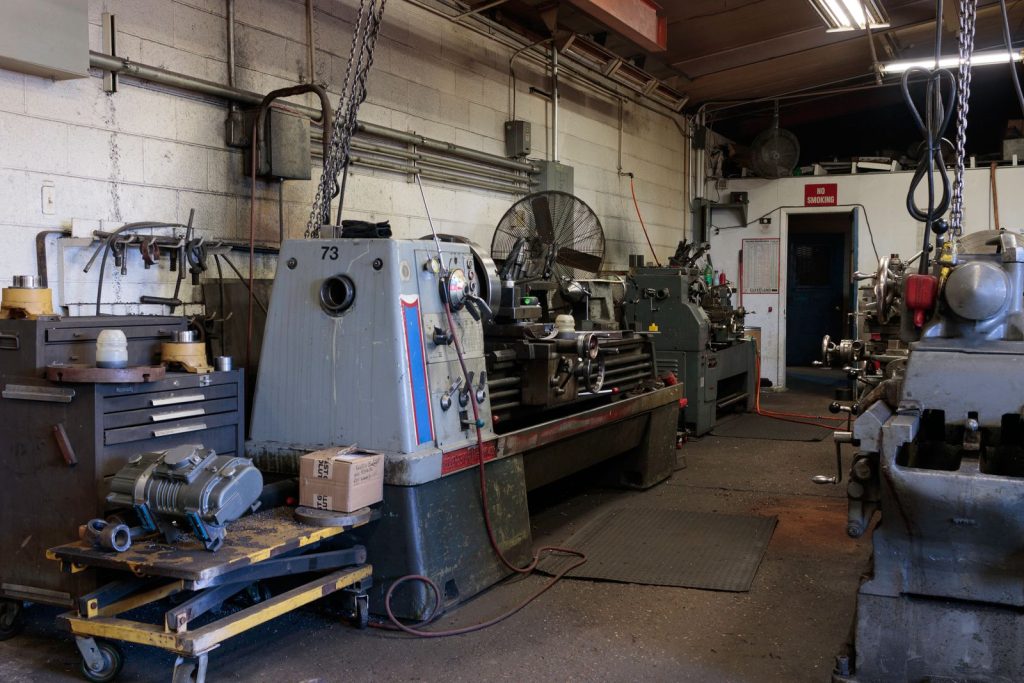
Your website’s equipment list and capability pages are your digital capability statement — they must be as precise and detailed as your machining.
SEO: Getting Found by Engineers Who Are Ready to Buy
The most valuable leads for a CNC machine shop come from engineers who are actively searching for a specific capability. These are not people browsing casually — they have a specific part, a specific material, and often a specific deadline. They are ready to send an RFQ to the first shop that convincingly proves it can do the work.
To capture these high-intent searches, your website must rank for specific, long-tail keywords that describe your most profitable capabilities. Instead of trying to rank for “CNC machining” (impossibly competitive), target phrases like “Swiss screw machining stainless steel Chicago,” “5-axis milling Inconel aerospace,” or “tight tolerance CNC turning medical components Illinois.” These specific searches have lower volume but dramatically higher conversion rates.
Create a dedicated, detailed page for each of your core capabilities, optimized for the specific keywords that your best customers use. Publish regular technical blog posts that address common engineering questions related to your processes. Over time, this content builds the topical authority that pushes your site to the top of search results for your target keywords. For comprehensive guidance, explore Lillian Group’s industrial digital marketing resources.
Video: Showing What Words Cannot Describe
A 90-second video of your most impressive machining operation — a complex 5-axis part being machined from a solid billet, or a Swiss lathe producing a tiny, intricate medical component — communicates your capability more powerfully than any written description. Engineers are visual thinkers; they want to see the machine moving, the chips flying, and the finished part emerging from the operation.
You do not need a Hollywood production budget. A modern smartphone, good lighting, and a stable mount can produce compelling shop floor videos. Post these videos on your website’s capability pages, on your LinkedIn company page, and on YouTube (which is the second-largest search engine in the world and an underutilized channel for industrial companies). A YouTube channel with 20 to 30 detailed machining videos can generate a steady stream of qualified leads from engineers who search for specific processes on the platform.
The best marketing a machine shop can do is show the work. A video of a complex titanium aerospace part being machined to ±0.0001 tolerance speaks louder than any sales pitch ever could.
Referral Programs: Systematizing Your Best Lead Source
Most CNC machine shops acknowledge that referrals are their best lead source. Yet very few have a systematic program for generating more of them. A referral program for a job shop does not need to be complex: simply identify your 10 to 20 best clients, have your account manager reach out personally to thank them for their business, and explicitly ask whether they know of any colleagues or other companies that might benefit from your services.
Consider offering a formal referral incentive — a discount on a future order, a gift card, or a charitable donation in the client’s name. The key is making the ask explicit and making it easy for satisfied clients to refer you. Many of your best clients would happily refer you if they were simply asked.
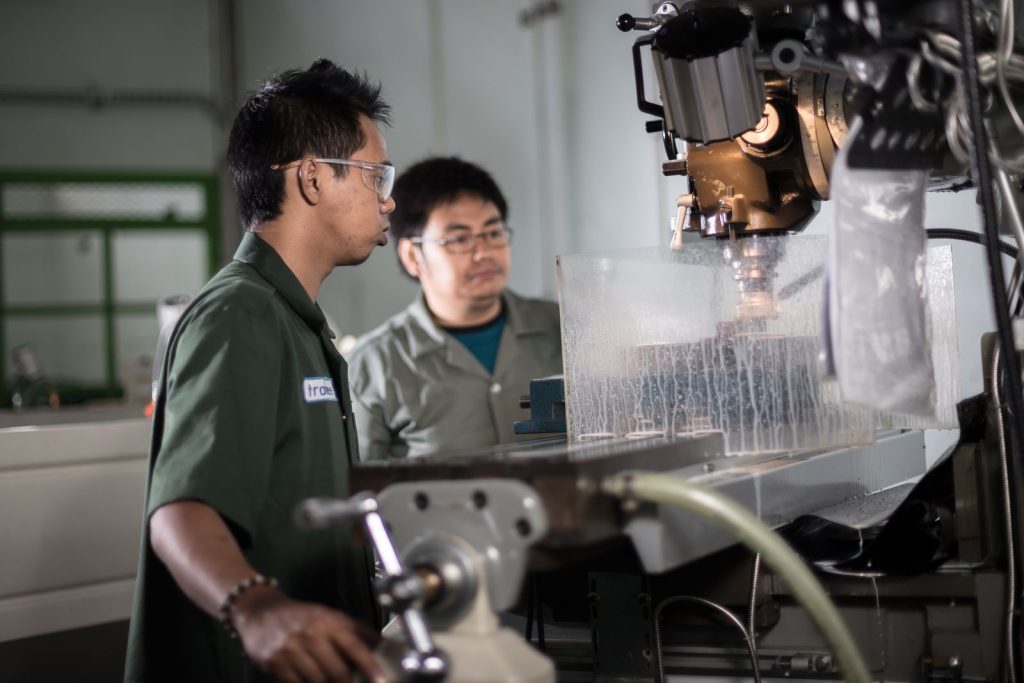
Referrals are the highest-quality leads a machine shop can receive — a systematic referral program turns your best clients into your best salespeople.
Ready to Fill Your Production Schedule with Better Work?
Lillian Group Marketing helps CNC machine shops and job shops build the digital presence needed to attract higher-value contracts and reduce dependence on a small number of key accounts.
Schedule a Free Strategy CallFrequently Asked Questions
How do small machine shops compete against large contract manufacturers?
Specialization is the answer. A small shop that is the undisputed expert in a specific niche — Swiss machining for medical devices, or tight-tolerance aluminum machining for defense applications — can command premium prices and attract clients that a generalist shop cannot. Your marketing should aggressively communicate that specialization.
Should a machine shop list prices on their website?
Exact pricing is impossible for custom work, but you can and should list your minimum order quantities or minimum project values. This transparency saves your estimating team from spending hours quoting projects that are too small for your business model.
How important are Google reviews for a machine shop?
Extremely important for local SEO. A Google Business Profile with 20+ positive reviews from recognizable local companies significantly improves your visibility in local search results and provides powerful social proof for buyers who are evaluating you against local competitors.
What is the best way to showcase machining capabilities without violating NDAs?
Use ‘blind’ case studies that describe the application and the engineering challenge without identifying the client. Focus on the process and the measurable results. You can also showcase raw capability by machining demonstration parts specifically designed to highlight your most impressive tolerances and geometries.