
Artificial intelligence has become the most over-hyped and under-utilized technology in marketing. The breathless predictions about AI replacing marketing teams entirely have not materialized, but the practical applications of AI in manufacturing marketing are genuinely valuable — if you know where to look and how to apply them. This guide cuts through the hype and focuses on the specific AI manufacturing marketing applications that are delivering real results for industrial companies today.
The key insight is that AI is most powerful as an amplifier of human expertise, not a replacement for it. The most effective applications of AI in manufacturing marketing combine the efficiency and scale of AI with the technical knowledge and strategic judgment of experienced marketing professionals.
AI for Content Creation: The Efficiency Multiplier
The most widely adopted AI application in manufacturing marketing is content creation assistance. Tools like Claude, GPT-4, and Gemini can significantly accelerate the production of first drafts for blog posts, case studies, email campaigns, and social media content — freeing your marketing team to focus on strategy, editing, and the technical accuracy review that AI cannot provide.
The critical caveat for manufacturing marketing is that AI-generated content requires rigorous human review for technical accuracy. AI models can produce plausible-sounding but technically incorrect claims about manufacturing processes, tolerances, and certifications. Every piece of AI-assisted content must be reviewed and approved by a subject matter expert before publication. Used correctly — as a first-draft accelerator rather than a final-draft generator — AI can double or triple your content production capacity without sacrificing quality.
For manufacturers who want to leverage AI content tools effectively, the right approach is to provide the AI with detailed technical briefs (written by your engineers) and use the AI to transform those briefs into polished, readable content. The technical expertise comes from your team; the writing efficiency comes from the AI. Professional editorial services can help you build an AI-assisted content workflow that maintains technical accuracy.
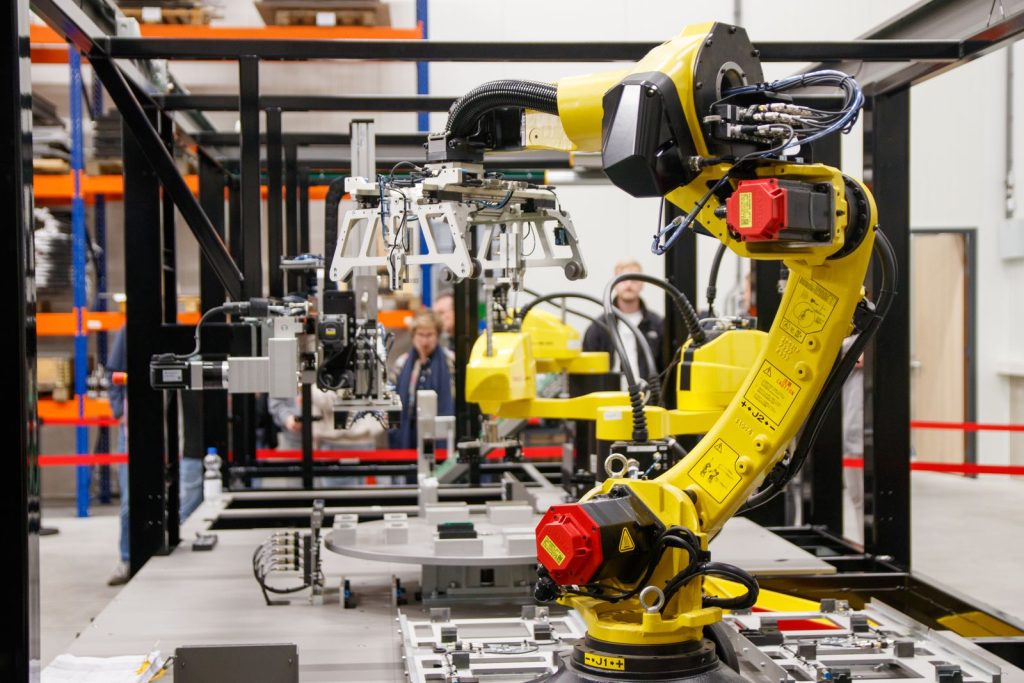
AI is most powerful as an amplifier of human expertise — use it to accelerate content production, but always apply human technical review before publication.
AI Chatbots: 24/7 Technical Support on Your Website
AI-powered chatbots on manufacturing websites can provide immediate responses to common prospect questions — about capabilities, certifications, lead times, and minimum order quantities — at any hour of the day or night. For manufacturers who receive inquiries from global clients in different time zones, a well-trained chatbot can significantly improve response time and prospect experience.
The key to an effective manufacturing chatbot is training it on your specific capabilities, certifications, and processes. A generic chatbot that provides vague, unhelpful answers will frustrate prospects and damage your brand. A well-trained chatbot that can accurately answer “Do you machine Inconel 718?” or “Are you AS9100 certified?” provides genuine value and can qualify prospects before routing them to your sales team.
Tools like Drift, Intercom, and HubSpot’s chatbot builder can be integrated with your website and trained on your specific content. Start with a focused set of common questions and expand the chatbot’s knowledge base over time based on the actual questions prospects ask. For help implementing a manufacturing chatbot, explore Lillian Group’s industrial digital marketing services.
Predictive Analytics: Identifying Your Next Best Customer
Predictive analytics tools use machine learning to analyze your existing customer data and identify the characteristics of your most valuable clients — then find prospects in your database or in the broader market that match those characteristics. For manufacturers with a large prospect database, predictive analytics can significantly improve the efficiency of your sales and marketing efforts by focusing resources on the highest-probability opportunities.
Platforms like 6sense, Bombora, and HubSpot’s predictive lead scoring use AI to analyze behavioral signals (website visits, content downloads, email engagement) and firmographic data (company size, industry, technology stack) to predict which prospects are most likely to convert and when. This intelligence allows your sales team to prioritize their outreach on the prospects that are most likely to become customers — rather than treating all leads equally.
AI for Personalization: Relevant Content at Scale
Personalization is one of the most powerful tools in B2B marketing, but it has traditionally been resource-intensive to execute at scale. AI-powered personalization tools can now dynamically customize website content, email campaigns, and advertising based on a visitor’s industry, job title, company, or previous behavior — delivering a more relevant experience to each individual prospect without requiring manual customization for each one.
For a precision machining company, this might mean showing aerospace-specific case studies and content to visitors from aerospace companies, and medical device-specific content to visitors from medical device companies — automatically, based on the visitor’s IP address and browsing behavior. This level of relevance significantly improves engagement rates and conversion rates. For help implementing AI-powered personalization, explore Lillian Group’s B2B marketing services.
The manufacturers who will win in the AI era are not the ones who use AI to replace human expertise — they are the ones who use AI to amplify it. AI handles the volume; humans handle the judgment.
AI Image Generation: Visual Content at Speed
AI image generation tools (Midjourney, DALL-E, Stable Diffusion) can produce high-quality visual content — infographics, conceptual illustrations, social media graphics — at a fraction of the cost and time of traditional graphic design. For manufacturing companies that need a steady stream of visual content for LinkedIn, email campaigns, and blog posts, AI image generation can significantly reduce the cost and time of visual content production.
The limitation is that AI-generated images cannot replace professional photography of your actual facility, equipment, and team — which remains the most powerful visual content a manufacturer can produce. Use AI image generation for conceptual and illustrative content, and invest in professional photography for the authentic, facility-specific images that build trust with technical buyers.
Optimizing for AI Search: The New SEO Frontier
Perhaps the most strategically important AI application for manufacturing marketing is optimizing your content to appear in AI-generated search answers. As tools like ChatGPT, Perplexity, and Google AI Overviews become primary research tools for technical buyers, appearing in these AI-generated answers is becoming as important as ranking in traditional Google search results.
The key to AI search optimization is producing content that is structured, specific, and authoritative — the same characteristics that make content rank well in traditional search. Use clear headings, specific data points, FAQ sections, and structured definitions. Cite credible sources. Provide comprehensive answers to the specific questions your buyers are asking. For a comprehensive AI search optimization strategy, contact Lillian Group Marketing.

Optimizing for AI search is the new SEO frontier — manufacturers whose content appears in ChatGPT and Perplexity answers will have a significant advantage in the awareness stage of the buyer journey.
Ready to Leverage AI in Your Manufacturing Marketing?
Lillian Group Marketing helps manufacturers implement AI-powered marketing tools — from content creation workflows and chatbots to predictive analytics and AI search optimization.
Schedule a Free Strategy CallFrequently Asked Questions
Will AI replace manufacturing marketing professionals?
No. AI is a powerful efficiency tool, but it cannot replace the strategic judgment, technical knowledge, and relationship-building skills of experienced manufacturing marketing professionals. The most effective marketing teams use AI to handle routine tasks and scale content production, freeing human expertise for strategy and quality control.
How do we ensure AI-generated content is technically accurate?
Every piece of AI-generated content must be reviewed by a subject matter expert — an engineer or technical specialist who can verify that all claims about processes, tolerances, certifications, and materials are accurate. Build this review step into your content production workflow before any AI-assisted content is published.
What is the best AI tool for manufacturing content marketing?
Claude (Anthropic) and GPT-4 (OpenAI) are the most capable general-purpose AI writing tools. For SEO-specific content, tools like Surfer SEO and Clearscope integrate AI writing assistance with keyword optimization. For image generation, Midjourney produces the highest-quality results for conceptual and illustrative content.
How does AI search affect our SEO strategy?
AI search tools like ChatGPT and Perplexity synthesize answers from multiple web sources, often citing specific pages. To appear in these answers, your content must be authoritative, well-structured, and specifically answer the questions your buyers are asking. FAQ sections, clear definitions, and specific data points are particularly valuable for AI search visibility.