|
Getting your Trinity Audio player ready...
|
B2B manufacturing marketing is one of the most demanding disciplines in the entire marketing profession. The buyers are technically sophisticated engineers and procurement officers who can detect a generic pitch from a mile away.
The sales cycles stretch from six months to two years. The purchase decisions involve millions of dollars and carry enormous operational risk. The companies doing the buying are increasingly conducting 70% of their research online before they ever speak to a salesperson.
If your marketing strategy still relies primarily on trade show booths and cold calls, you are losing contracts to competitors who have built a modern digital presence. This guide covers every major channel and strategy a manufacturing company needs to generate consistent, qualified leads in 2026.

6–18 mo
typical industrial sales cycle
3x
more leads from content marketing vs. traditional outbound, at 62% lower cost
47%
of B2B buyers view 3–5 pieces of content before contacting sales
Why Manufacturing Marketing Is Different
Consumer marketing is built on emotion and impulse. B2B manufacturing marketing is built on trust, technical proof, and risk reduction. A procurement manager at an aerospace OEM who selects the wrong contract machinist does not just lose money — they potentially ground aircraft. The stakes are existential. Your marketing must acknowledge and address this reality at every touchpoint. The buying committee for a major manufacturing contract typically includes:- A design engineer who evaluates technical capability
- A quality manager who evaluates certifications and process controls
- A procurement officer who evaluates pricing and supply chain stability
- A plant manager or VP of Operations who evaluates strategic fit
Effective B2B manufacturing marketing speaks to the entire buying committee — not just one decision-maker.
The Foundation: Your Website as a Digital Capability Statement
Before any other marketing channel can work, your website must function as a world-class capability statement. When an engineer lands on your site after a Google search, they are asking three questions in the first ten seconds: Can you make what I need? Can I trust you to do it right? How do I get a quote? If your site cannot answer all three immediately, they leave. A high-performing manufacturing marketing website includes:- A clear, specific value proposition on the homepage (not “world-class quality” — that means nothing)
- A detailed equipment and capabilities section with actual specifications
- Prominently displayed quality certifications (ISO 9001, AS9100, ISO 13485, ITAR, etc.)
- A frictionless RFQ portal that accepts CAD file uploads
- “5-axis CNC machining for medical implants”
- “AS9100 certified precision machining Illinois“
- “Custom aluminum extrusion low minimum order”
- Identifying 50 to 200 target accounts
- Mapping the buying committee at each account (using LinkedIn Sales Navigator)
- Creating highly personalized content and outreach sequences for each account
- Running targeted LinkedIn advertising campaigns visible only to employees at those specific companies
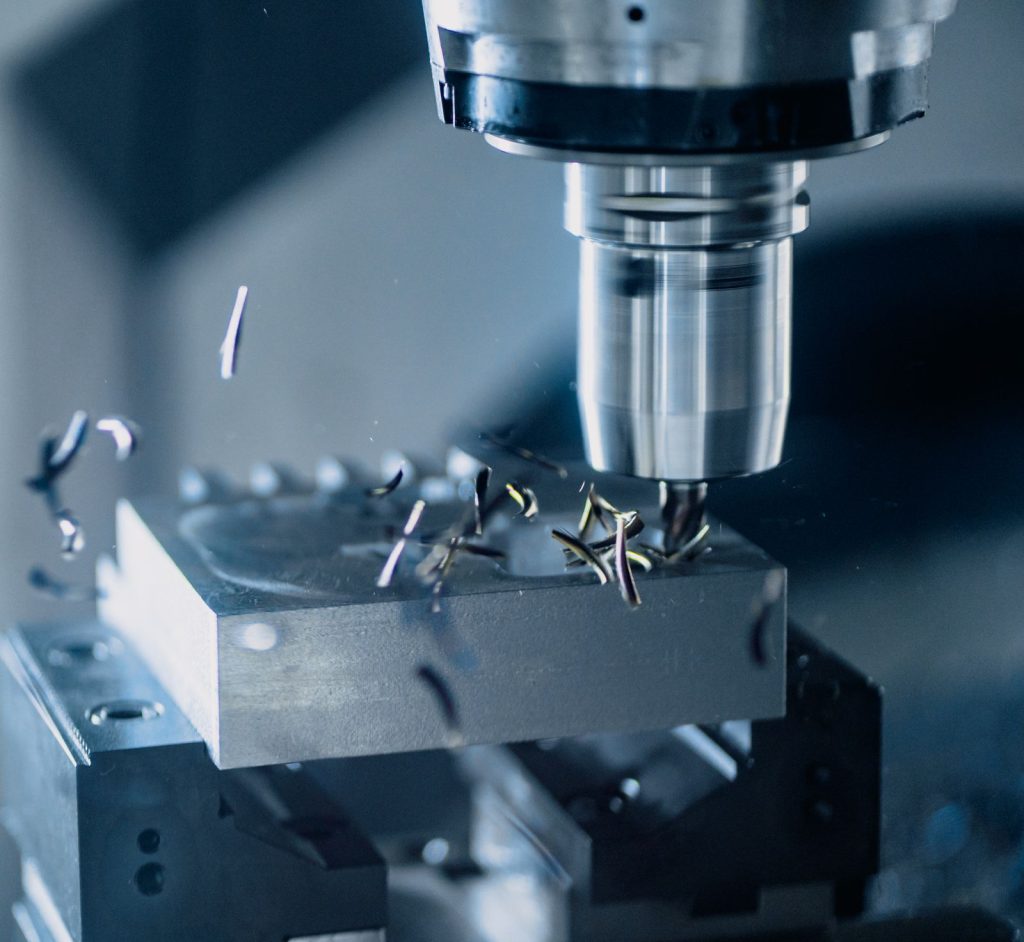
Precision in manufacturing demands precision in marketing — both require the right tools and expert execution.
Trade Shows: Integrating Digital Into the Physical
Trade shows like IMTS, MD&M, and Fabtech remain important for manufacturing companies, but their ROI has declined significantly for companies that treat them as standalone events. The modern approach integrates digital marketing before, during, and after the show. Six weeks before the show, run targeted LinkedIn ads to engineers and procurement managers who are registered attendees. Invite them to pre-book a meeting at your booth. During the show, capture every badge scan and business card digitally. Within 48 hours of the show’s close, trigger a personalized email marketing nurturing sequence for every contact. Companies that execute this integrated approach consistently report 3 to 5 times more qualified leads from the same trade show investment. For help planning an integrated event strategy, explore Lillian Group’s special events marketing services. Beyond paid advertising, LinkedIn’s organic reach for companies that post consistently is still exceptional. Content that performs well includes:- Short videos of complex machining processes
- Technical tips on design for manufacturability
- Behind-the-scenes looks at your facility
Frequently Asked Questions
How much should a manufacturing company spend on marketing?
Industry benchmarks suggest allocating 2% to 5% of annual revenue to marketing. For a company doing $10M in revenue, that is $200K to $500K per year.
Companies in highly competitive niches or those pursuing aggressive growth targets should be at the higher end of that range.
How long does it take for manufacturing marketing to generate results?
Paid advertising (Google Ads, LinkedIn Ads) can generate leads within the first 30 days. SEO and content marketing typically take 4 to 9 months to generate significant organic traction. ABM programs usually show measurable pipeline impact within 3 to 6 months.
What is the most important marketing channel for manufacturers?
Your website is the foundation — everything else drives traffic to it. After that, SEO and content marketing provide the highest long-term ROI. LinkedIn is the most effective paid channel for reaching technical B2B buyers.
Should we hire an in-house marketing team or an agency?
For most mid-sized manufacturers, a hybrid model works best. Have one internal marketing coordinator who manages the relationship and handles day-to-day tasks.
Then partner with a specialized manufacturing marketing agency that provides strategic direction, technical content creation, SEO, and digital advertising management.