Marketing for contract manufacturers presents a specific set of challenges that distinguish it from virtually every other type of industrial marketing. As a contract manufacturer, you are not selling a product — you are selling your capacity, your process expertise, your quality systems, and your reliability. Your clients are entrusting you with their most sensitive intellectual property: their product designs, their formulations, their specifications. And in many cases, they are also trusting you not to compete with them or disclose their identity to the market.
These constraints — NDAs, confidentiality requirements, and the inherently service-based nature of the business — make contract manufacturing marketing uniquely challenging. This guide addresses those challenges head-on and provides a practical framework for building a marketing program that fills your capacity with the right clients at the right margins.
Positioning: The CM’s Most Critical Marketing Decision
The most common positioning mistake contract manufacturers make is trying to be everything to everyone. “Full-service contract manufacturer serving all industries” is not a positioning statement — it is a description of a commodity. The most successful contract manufacturers have a clear, specific positioning that defines exactly who they serve and what makes them the best choice for that specific audience.
Effective CM positioning is built around one or more of these differentiators: industry specialization (e.g., “the leading contract manufacturer for Class II medical devices in the Midwest”), process specialization (e.g., “the most advanced precision CNC machining CM for aerospace applications in North America”), scale specialization (e.g., “the go-to CM for high-mix, low-volume production runs that larger CMs won’t touch”), or geographic specialization (e.g., “the only ISO 13485 certified CM within 100 miles of Chicago’s medical device corridor”).
Choose the positioning that most accurately reflects your genuine competitive advantage and that resonates most strongly with your highest-value target clients. For help developing your CM positioning, explore Lillian Group’s manufacturing marketing services.
The Website: Your 24/7 Sales Representative
For a contract manufacturer, the website is the most important marketing asset. It must clearly communicate your capabilities, your certifications, your quality systems, and your process for onboarding new clients. Critically, it must make it easy for a prospect to submit a confidential project inquiry.
The most important pages on a CM website are: the Capabilities page (with specific process descriptions, equipment lists, and tolerance specifications), the Quality & Certifications page (with downloadable current certificates and quality system overview), the Industries page (showing the specific sectors you serve with relevant examples), the Case Studies page (using blind case studies that protect client confidentiality), and the Contact/RFQ page (with a secure inquiry form that accepts confidential project briefs and CAD file uploads).
Your website must also address the NDA concern proactively. A statement like “All client projects are protected by comprehensive NDAs. We never disclose client identities or product details without explicit written permission” addresses the confidentiality concern that is top-of-mind for every CM prospect. For comprehensive website strategy, explore Lillian Group’s industrial digital marketing services.

Your CM website must communicate capabilities, certifications, and confidentiality commitments — the three things every prospect needs to know before submitting an RFQ.
Content Marketing: Demonstrating Expertise Without Revealing Clients
Content marketing is particularly powerful for contract manufacturers because it allows you to demonstrate deep technical expertise without revealing confidential client information. A blog post about “Design for Manufacturability in High-Volume Injection Molding” or “How to Reduce Total Cost of Ownership in Contract PCB Assembly” showcases your expertise in a way that is genuinely valuable to prospects — without disclosing anything about your existing clients.
The most effective content topics for CMs are: DFM guides for your specific processes, material selection guides for your target industries, quality and compliance guides relevant to your target sectors, and total cost of ownership analyses that help buyers understand the true cost of manufacturing decisions. This type of content attracts the right prospects (engineers and procurement managers who are actively researching manufacturing decisions) and positions your company as the expert they want to work with.
Trade Shows: The CM’s Business Development Engine
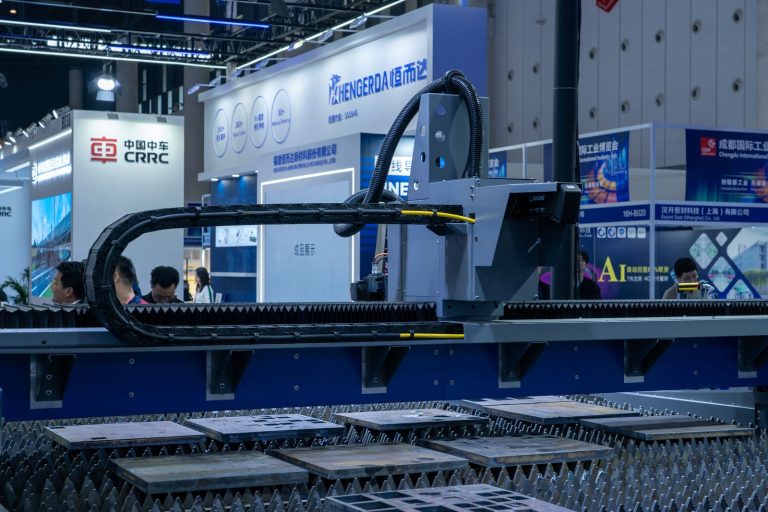
Trade shows remain one of the most effective business development channels for contract manufacturers. The key is attending the right shows — not manufacturing trade shows where you will be surrounded by competitors, but the industry-specific shows where your target clients gather.
A medical device CM should exhibit at MD&M West and the AdvaMed conference, not just at manufacturing-focused shows. An aerospace CM should attend the Aerospace & Defense Supplier Summit and the Paris Air Show. An electronics CM should be at IPC APEX EXPO and CES. These industry-specific shows put you in front of the exact buyers who need your services, rather than a general manufacturing audience. For help planning and executing your trade show strategy, explore Lillian Group’s special events marketing services.
The most successful contract manufacturers have stopped trying to be everything to everyone. They have chosen their niche, built their expertise, and become the undisputed go-to CM for a specific type of work. That is how you escape the commodity trap.
Referral Programs: Systematizing Your Best Lead Source
For most contract manufacturers, referrals from existing clients and industry contacts are the single best source of new business. Yet very few CMs have a systematic program for generating more referrals. A simple referral program — identifying your 10 to 20 best clients, personally asking them for referrals, and offering a meaningful incentive for successful introductions — can significantly increase your referral volume without any additional marketing spend.
Also consider building referral relationships with complementary service providers: design engineering firms, product development consultancies, and materials testing labs that work with the same buyer profile as you. These partners regularly encounter clients who need manufacturing support and can be powerful referral sources if you invest in the relationship. For a comprehensive business development strategy, contact Lillian Group Marketing.

Referrals from satisfied clients and complementary service providers are the highest-quality leads a CM can receive — systematize the ask.
Ready to Fill Your CM Capacity with Better Clients?
Lillian Group Marketing helps contract manufacturers build the digital presence, content strategy, and business development programs needed to attract higher-value clients and reduce dependence on a small number of key accounts.
Schedule a Free Strategy CallFrequently Asked Questions
How do contract manufacturers market without revealing client information?
Use blind case studies that describe the application and results without naming the client. Focus your content marketing on process expertise, material knowledge, and quality systems rather than specific client projects. Proactively address confidentiality in your marketing materials to reassure prospects.
Should a contract manufacturer specialize or offer broad capabilities?
Specialization consistently produces better marketing results and higher margins. A CM that specializes in a specific industry or process can charge premium prices, build deeper expertise, and attract clients who value that expertise over cost.
How do we market to OEMs who already have established CM relationships?
Focus on being the backup or overflow supplier first. Many OEMs are actively looking for qualified secondary sources to reduce supply chain risk. Once you have demonstrated your capabilities on smaller projects, you can expand the relationship over time.
What is the most effective digital marketing channel for contract manufacturers?
SEO and content marketing consistently deliver the best long-term ROI for CMs, because they capture buyers who are actively searching for specific manufacturing capabilities. LinkedIn advertising is the most effective paid channel for reaching specific buyer personas at target accounts.