A 90-second video of a 5-axis CNC machine cutting a complex titanium aerospace component communicates more about your precision machining capability than 10 pages of written content. Video marketing for manufacturing leverages this fundamental truth — that seeing is believing — to build trust, demonstrate capability, and generate qualified leads in a way that no other content format can match.
Despite this, the vast majority of manufacturers have no video presence whatsoever. This represents a significant competitive opportunity for the companies willing to invest in a systematic video marketing strategy.
The Six Types of Manufacturing Videos That Drive Results
Capability demonstrations are the most fundamental type of manufacturing video — showing a specific process in action. A 60-to-90-second video of your most impressive machining operation, with a brief narration explaining the material, the tolerances, and the application, is the single most effective video you can produce.
Facility tours give prospects a virtual walk-through of your operation. A 3-to-5-minute facility tour video — showing your equipment, your quality lab, your cleanroom (if applicable), and your team — builds the kind of trust that previously required an in-person visit. For prospects who are geographically distant or too busy to visit in person, a well-produced facility tour video can be the deciding factor in choosing you over a competitor.
Case study videos feature a client (or a blind description of a client project) explaining the challenge they faced and the results your company delivered. As discussed in our case studies guide, video testimonials are the most persuasive content a manufacturer can produce.
Technical explainer videos educate prospects on a specific process, material, or engineering concept. A 2-minute video explaining the difference between investment casting and die casting, or the advantages of Swiss screw machining for small-diameter components, positions your company as the technical authority on that topic.
Team and culture videos humanize your company and help with talent attraction. A 2-minute video featuring your engineers talking about the technical challenges they solve every day is both a powerful recruiting tool and a compelling brand differentiator.
Trade show and event videos capture the energy and activity of your trade show presence and extend the reach of your event investment to the much larger audience that could not attend in person.
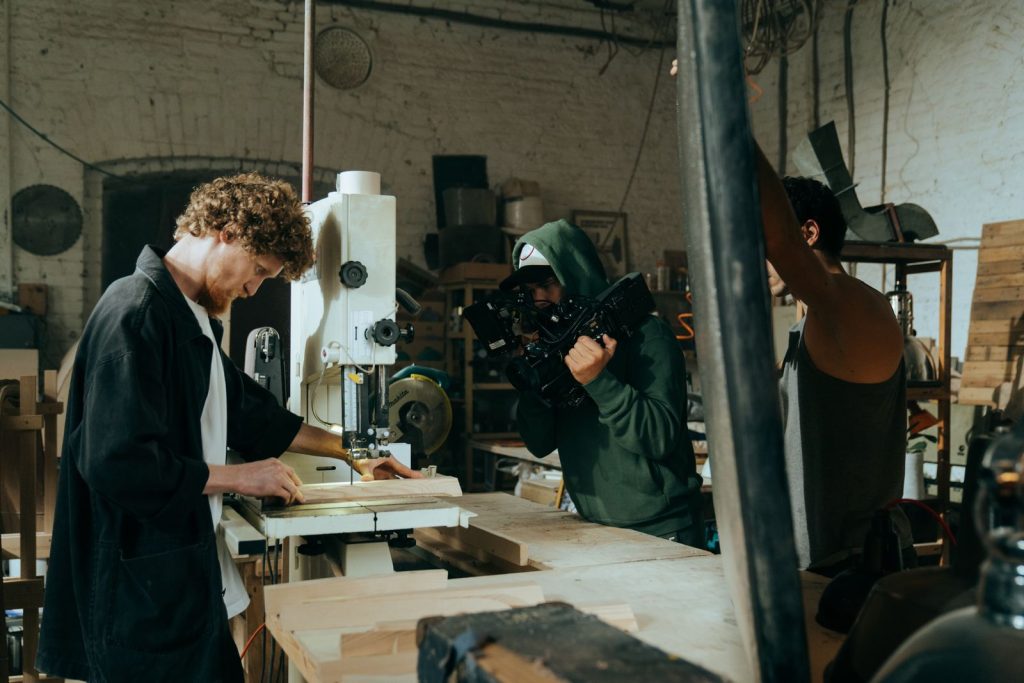
A 90-second video of your most impressive machining operation communicates more capability than 10 pages of written content.
Production: You Do Not Need Hollywood
The most common reason manufacturers cite for not producing video is cost. In reality, a modern iPhone or Android smartphone, combined with good lighting and a basic tripod, can produce video quality that is entirely acceptable for B2B marketing purposes. The content matters far more than the production value — an engineer watching a video of a complex 5-axis part being machined does not care whether it was shot on a $50,000 cinema camera or a smartphone.
The key production elements to get right are lighting (natural light or a simple LED panel makes a dramatic difference), audio (a $30 lapel microphone eliminates the echo and background noise that makes smartphone audio sound unprofessional), and stability (a tripod or gimbal eliminates the shaky footage that signals amateur production). With these three elements in place, you can produce compelling manufacturing videos at minimal cost.
For higher-stakes videos — facility tours, client testimonials, or videos for major trade shows — investing in a professional video production team is worthwhile. A professionally produced 3-minute facility tour video can serve as your most powerful sales tool for years. Explore Lillian Group’s special events and production services for professional video production support.
YouTube: The Underutilized Industrial Search Engine
YouTube is the second-largest search engine in the world, and it is dramatically underutilized by manufacturing companies. Engineers regularly search YouTube for specific machining processes, material properties, and engineering solutions. A YouTube channel with 20 to 30 well-titled, informative manufacturing videos can generate a steady stream of qualified leads from engineers who find your content while researching specific topics.
Optimize your YouTube videos for search by using specific, keyword-rich titles (“5-Axis CNC Milling of Titanium Ti-6Al-4V Aerospace Component”), detailed descriptions that include your key capabilities and contact information, relevant tags, and closed captions (which improve both accessibility and search ranking). Include a clear call to action in every video directing viewers to your website’s RFQ page. For a comprehensive industrial digital marketing strategy that includes YouTube, contact Lillian Group.
YouTube is the most underutilized marketing channel for manufacturers. Engineers search YouTube for specific processes and materials every day — and the manufacturers who have videos on those topics get the calls.
Embedding Video on Your Website
Videos embedded on your website pages significantly increase the time visitors spend on those pages, which is a positive signal to Google’s ranking algorithm. Embedding a capability demonstration video on your “5-Axis Machining” page, a facility tour video on your “About Us” page, and case study videos on your case study pages will improve both user engagement and search rankings for those pages.
Host your videos on YouTube and embed them on your website rather than hosting them directly on your server — this reduces page load time (a critical SEO factor) and simultaneously builds your YouTube channel’s view count. For help integrating video into your overall manufacturing marketing strategy, contact Lillian Group.

Embedding videos on your capability pages increases time-on-page, improves SEO, and gives prospects the visual proof they need to choose you.
Ready to Show Prospects What You Can Do?
Lillian Group Marketing develops video marketing strategies for manufacturers — from production planning and scripting to distribution and performance measurement.
Schedule a Free Strategy CallFrequently Asked Questions
How much does a professional manufacturing video cost?
A professionally produced 2-to-3-minute capability or facility tour video typically costs between $3,000 and $10,000, depending on the production company and the complexity of the shoot. Smartphone-produced videos for LinkedIn and YouTube can be produced at essentially no cost beyond your time.
How long should a manufacturing marketing video be?
For LinkedIn and social media, 60 to 90 seconds is the sweet spot. For facility tours and case studies on your website, 2 to 5 minutes is appropriate. For YouTube educational content, 5 to 15 minutes is acceptable if the content is genuinely informative throughout.
Should we add subtitles to our manufacturing videos?
Yes, always. A significant percentage of LinkedIn and YouTube viewers watch videos without sound. Subtitles also improve accessibility and help search engines index the video content. Most video editing software and platforms (YouTube, LinkedIn) offer automatic subtitle generation.
How do we get our engineers to appear on camera?
Start with the most enthusiastic team members and let them set an example. Keep the initial videos informal and low-pressure — a 60-second clip of an engineer explaining a specific machining challenge is far less intimidating than a formal interview setup. Once they see the positive response from clients and prospects, others will become more willing to participate.